
Online auto classified platform CarTrade Tech on Tuesday said it fixed a price band of Rs 1,585-1,618 a share for its nearly Rs 2,999-crore initial public offer. The initial public offering (IPO) will open for subscription on August 9 and conclude on August 11. The bidding for anchor investors will open on August 6, the company announced. The initial share-sale will be entirely an offer for sale (OFS) of 18,532,216 equity shares.

Experts said many firms had unbilled assets on their books.

'If she contests it, then these people will have to fight it in court.'

The biggest spend (Rs 4,406 crore) was for Schedule VII (II), which involves "promoting education, including special education and employment enhancing vocation skills, especially among children, women, elderly and the differently abled and livelihood enhancement projects". The FY19 spend was 17.2 per cent higher than Rs 1,0128.3 crore spent during the previous year.

With the markets scaling new highs, as many as 43 stocks from the Nifty50 index and 27 of the 30 scrips that are part of the S&P BSE Sensex are trading above their respective 200-day moving average (DMA). The 200-DMA is seen as one of the most relevant trend indicators by investors and traders, who believe that stocks and indices trading above this level possess strength and are likely to rally in the short to medium term, while the ones trading below this level are viewed as bearish and expected to see a sell-off. Wipro, UPL, Kotak Mahindra Bank, Hindalco, Infosys, Cipla, and Adani Enterprises are the only stocks from the Nifty50 pack that are still below their respective 200-DMA, the exchange data suggests.
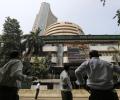
75 companies can dole out Rs 1.1 trillion from the 'extra cash' to shareholders.

Going by the provisions of the new company law, the responsibility and accountability equation for independent directors has seen a major change.

Despite slowing down, China and India continue to contribute more than half of the world's economic growth, a new report by an investment management and advisory services firm has claimed.

Five of the 10 best-paid independent directors belonged to the Tata group, followed by four from Reliance Industries and one from Wipro.

India Inc has too much on its plate to ensure double digit growth in FY16.

Analysts question negative net worth because of dividend payout ahead of IPO.

The sharp rally in the markets thus far in fiscal 2023-24 (FY24) has left analysts struggling to find investment-worthy themes. The S&P BSE Sensex has surged nearly 7 per cent thus far in FY24 and hit a fresh 52-week high of 63,601.71 levels on June 22, mostly led by foreign institutional (FII) flows. "The Indian market has seen a broad rally in the past few months but headline indices have seen more modest performance. "We are not very clear about the reasons for the rally and the divergent performance and struggle to find ideas in the consumption, investment and outsourcing sectors after the sharp run-up in several of our favored sectors and stocks in the past two months," wrote Sanjeev Prasad, co-head, Kotak Institutional Equities, in a recent co-authored note with Anindya Bhowmik and Sunita Baldawa.

While the investment amount could not be immediately ascertained, a report pegged it at about $2 billion.

Byju's, India's most-valued startup, has decided to put two of its key assets -- Epic and Great Learning -- on the block to generate $800 million-$1 billion in cash, with an aim to meet the edtech firm's various commitments, including repaying the entire $1.2 billion term loan B (TLB) within six months, according to sources. The cash-strapped company has proposed repaying $300 million of the $1.2 billion loan in the next three months, depending on whether the lenders accept Byju's amendment proposal, said the people familiar with the development. "This loan repayment proposal has been submitted to the lenders and conversations are going in the right direction," said a person in the know.

Tax department sends notices saying they are liable to pay MAT.

'Considering Pai is putting his own personal money in Byju's, stakeholders in the company can look forward to more governance and transparency.'
.jpg)
The new provisions strengthen the hands of minority shareholders and will improve corporate governance.

The joint venture of Jio Financial Services and BlackRock to foray into India's asset management space could be disruptive but not disastrous for incumbent industry players, analysts said on Thursday. As an investment strategy, analysts suggest investors stay put in shares of those AMCs that consistently improve business metrics, and where market capitalisation-to-asset under management (AUM) valuation is not stretched. However, growth expectations of incumbent players may get trimmed in the medium-to-long term, analysts said, once the Jio-BlackRock JV unveils its plans, discounting the looming challenge as significant enough to dent their profitability.

Various online platforms let you invest in direct mutual funds.

Infosys, however, feels the high level of cash is an important tool to weather tough times.

The Securities and Exchange Board of India's (Sebi's) planned research analyst regulations will also apply to proxy advisory services which provide advice on corporate governance and issue voting recommendations to institutional shareholders regarding company resolutions.

Infosys needs to be more innovative and disruptive with its product and services, keeping its focus on growth.

It has been a year since the Reserve Bank of India (RBI) initiated prompt corrective action (PCA), an exercise that puts weak banks under central bank scrutiny, against the 94-year-old Lakshmi Vilas Bank (LVB). But recently, this low-profile Chennai-headquartered bank found itself attracting some unwonted publicity when 60 per cent of its shareholders voted against a proposal to re-appoint seven directors, including one of the promoters, K R Pradeep (who holds around 2 per cent), and the company's managing director & chief executive officer S Sundar.

A complex holding structure and unrelated businesses clubbed under one roof could have been the reasons that prompted investors to shun the stock, experts say. These are likely to impact the company's ability to raise funds, too, they add.

ITC was the biggest gainer in the Sensex pack, rallying 3.14 per cent. Maruti Suzuki, Axis Bank, Hero MotoCorp, Vedanta, Asian Paints, M&M, HUL, Bajaj Auto and PowerGrid were among the other top gainers, rising up to 2.13 per cent.

Equity benchmarks Sensex and Nifty ended on a mixed note on Wednesday as the euphoria about the Budget fizzled out, with investors going for profit-taking ahead of the Fed interest rate decision. The 30-share BSE benchmark Sensex climbed 158.18 points or 0.27 per cent to settle at 59,708.08 after it trimmed most of the intra-day gains. During the day, it had zoomed 1,223.54 points or 2 per cent to 60,773.44.

Because they have become too big and pervasive and the time to regulate is long gone, points out Debashis Basu.

Business success often involves a combination of planning, implementation, and continuous learning, says rediffGURU Harsh Bharwani.

The combined pay for India Inc's top management was up 30 per cent in FY16, growing at the fastest pace in nine years

After a sharp outperformance in the mid-and small-cap segments in the first half of calendar year 2023 (H1-CY23), analysts are now turning cautious on these two market segments and suggest investors stay selective and look for valuation comfort and earnings visibility before investing. The S&P BSE Midcap index has surged 13.7 per cent in H1-CY23, and the S&P BSE Small-cap index gained 12.7 per cent during this period, data shows. The S&P BSE Sensex, in comparison, has moved up 6.4 per cent.

The paper will invite comments on whether or not the royalty ceiling applicable till 2009 should be re-imposed.

The clarifications came directly from the board of directors.

On the 30-share index, Maruti was the biggest loser, shedding 3.60 per cent. Other major laggards were Yes Bank, IndusInd Bank, Tata Steel, Hero MotoCorp and NTPC -- ending up to 2.33 per cent lower.
.jpg)
Since the cash flows will be impacted in a big way, DLF will have to resort to selling non-core assets in a substantial and significant manner through the next few quarters.

Your awareness about the effect of the home loan tenure and EMI on your loan empowers you to take better decisions, explains Gaurav Mohta.

Analysts say the Essar Group has been following a policy of delisting just when its businesses begin to record substantial upside, denying shareholders their share of decent returns.
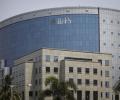
The board will first need to unpack IL&FS - it has 169 group companies with 24 direct subsidiaries, 135 indirect subsidiaries, six joint ventures and four associate companies, says Amit Tondon.

As many as 10 public sector banks could be out of the infusion plan because of Sebi's minimum public shareholding norms.

With more firms now offering stock options to their chief executives, the salaries of these managers are sky-rocketing.
Bank CFOs may meet next week to discuss minimum public shareholding and takeover rule issues.
 © 2026 Rediff.com - Advertise with us - Disclaimer - Privacy Policy - Sitemap - Feedback - About us - Terms of use - Grievances